Surrounded by People, But Still Feeling Alone?
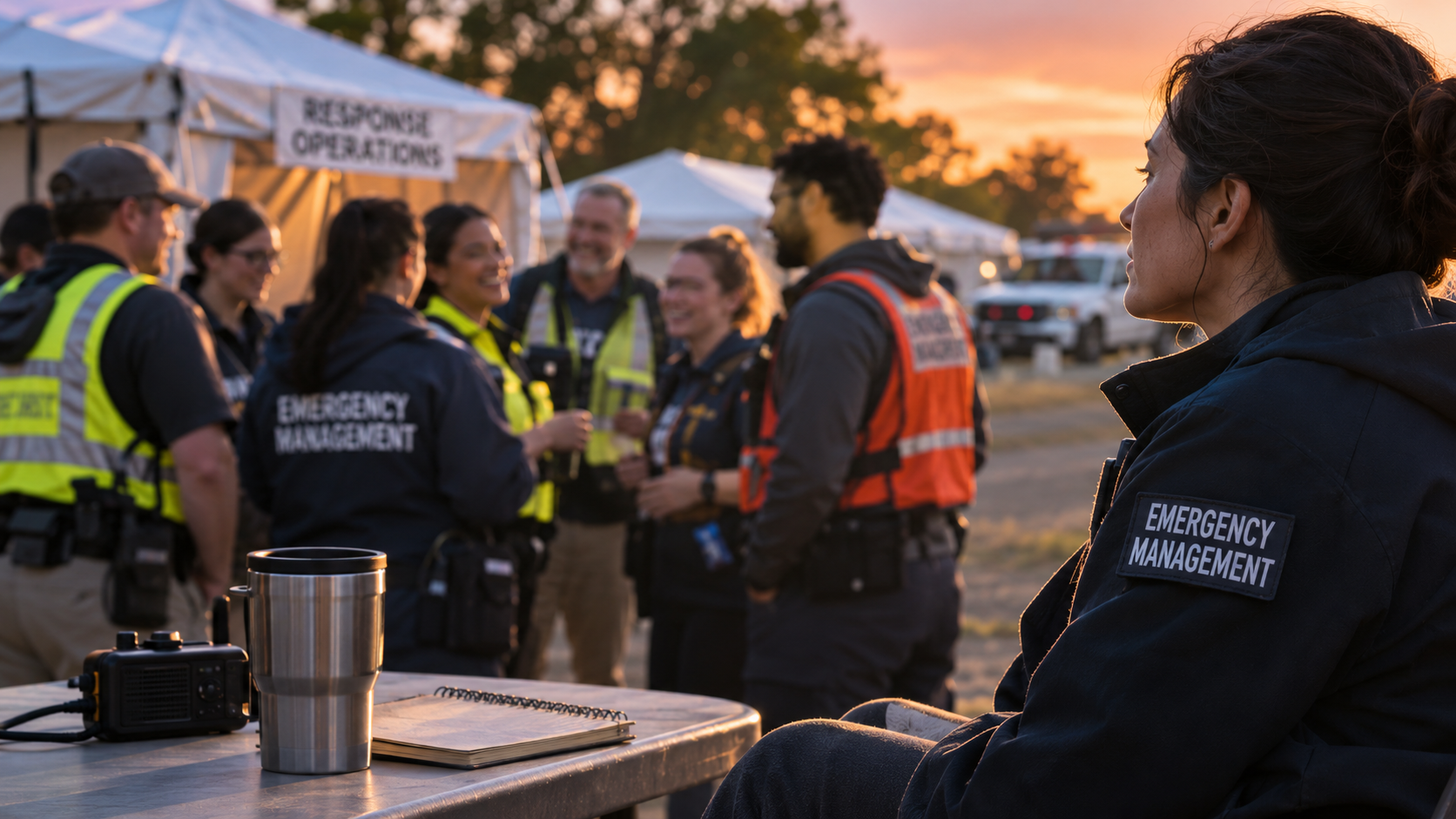
Emergency management and disaster response are built on relationships. We coordinate across agencies, solve problems with people we've just met, and sometimes spend more time with colleagues during an incident than we do with our own families.
During a response, those relationships can develop quickly. You might spend 12-hour shifts working alongside someone, share meals between briefings, or work through a problem that neither of you could solve alone. By the end of an activation, you may feel like you've known that person for years.
Then the response ends. Everyone returns to their regular jobs, agencies, or communities. The daily conversations stop, and people who were once part of your routine may become someone you occasionally see at a conference or message when the next disaster happens.
For a profession that depends so heavily on relationships, it's worth considering how well we maintain those connections when we're not responding to an emergency.
Being Connected at Work Isn't the Same as Feeling Supported
It's easy to think about social connection in terms of how many people we know. In emergency management, it's possible to have hundreds of contacts across government agencies, nonprofits, and private organizations. But having a large professional network doesn't necessarily mean having people you feel comfortable turning to when things get difficult.
The distinction between having contacts and having support matters in a profession where people regularly manage uncertainty, competing priorities, and difficult decisions.
Consider an emergency manager who is the only person responsible for the program at a hospital, university, or local government agency. They may work with dozens of departments and outside partners, yet have no one in their organization who fully understands the demands of their role.
Or consider someone returning from a disaster deployment. They may have spent weeks surrounded by colleagues who understood the situation without needing much explanation. Back home, the people closest to them may care deeply but have little experience with what they just went through.
Neither situation automatically means someone is lonely or struggling. But both show why the number of people around us doesn't always reflect the support we have available.
Why Connection Matters for Mental Fitness
Mental fitness involves our ability to recognize and manage stress, adapt to challenges, make decisions, and recover from demanding experiences. Relationships can support those abilities in several ways.
A trusted colleague might help us think through a difficult decision, challenge an assumption, or recognize when we've taken on too much. A peer who understands disaster response may provide perspective that someone outside the profession cannot. Friends and family can offer support and a sense of identity beyond our work.
Research involving World Trade Center responders has also examined the relationship between perceived social support and mental health over time. The findings reinforce the importance of considering relationships when supporting responder well-being, while recognizing that social support is only one factor influencing mental health.
That doesn't mean having strong relationships prevents burnout, eliminates stress, or guarantees better decisions. It also doesn't mean every difficult experience needs to be discussed with colleagues. People differ in what kind of support they want, when they want it, and whom they trust.
The value is having options. When we have people we can turn to, we may have more ways to work through challenges than when we're trying to manage everything alone.
Our Work Can Make Relationships Harder to Maintain
Emergency management and disaster response create some unusual challenges for maintaining connections.
For those who deploy, relationships may develop intensely over a short period and then become difficult to sustain once everyone returns home. Others work rotating shifts, travel frequently, or have unpredictable schedules that make regular social activities difficult.
Some professionals work remotely or are embedded in organizations where emergency management is only a small part of the overall mission. They may rarely interact with others who share their responsibilities. Even in larger agencies, people can become so focused on operational demands that conversations outside immediate tasks are limited.
There is also a cultural challenge. In mission-driven work, being dependable and capable can become part of how we see ourselves. Asking for support may feel uncomfortable, especially when we know our colleagues are already carrying their own workloads.
These conditions matter because social connection requires more than good intentions. People need opportunities to build trust, time to maintain relationships, and environments where asking for help doesn't carry unnecessary risk.
A team-building event won't fix a workplace where people fear being judged for admitting they're overwhelmed. Likewise, telling someone to maintain their friendships doesn't address a schedule that leaves them with little time or energy outside work.
Connection is partly an individual effort, but the conditions around us influence whether it's possible.
Building Relationships Before We Need Them
We typically recognize the value of support after something difficult happens. A challenging deployment, a stressful decision, or a period of heavy workload can remind us how helpful it is to have someone who understands.
But relationships are generally easier to rely on when we've invested in them before reaching that point.
That doesn't require everyone to become more outgoing or add another obligation to an already full calendar. It may mean being more intentional about the relationships and opportunities already available.
For someone working alone in an emergency management role, that might mean maintaining contact with peers in neighboring jurisdictions or similar positions at other organizations. A professional association, informal peer group, or former colleague could provide a place to exchange ideas and discuss challenges that don't have an obvious answer.
For someone who deploys, it might mean staying in touch with a few colleagues after an activation ends. Not everyone needs to remain close, but relationships built during demanding experiences don't have to disappear when the assignment does.
For supervisors and team leaders, supporting connection might involve creating opportunities for staff to learn from one another, encouraging mentoring, or making space for honest conversations about workload and challenges. Those opportunities need to be backed by trust and reasonable working conditions, not treated as another task employees must complete.
Organizations also have a role. Peer support programs, mentoring opportunities, professional development networks, and cross-agency partnerships can help people build relationships beyond their immediate teams. However, these efforts work best when participation is meaningful, accessible, and supported rather than simply added to an already crowded schedule.
What Does Your Support Network Actually Look Like?
Having a professional network is valuable. Having people we can rely on is something different.
It may be worth thinking about the relationships you have today. Who would you call if you needed help working through a difficult professional decision? Who could you speak with about something stressful without worrying that it would affect how they see your abilities? Who notices when you haven't been yourself lately?
Those people don't all need to be colleagues. In fact, having relationships outside emergency management can be especially valuable when so much of our time and identity is tied to the profession.
And if you can't immediately identify someone, that doesn't necessarily mean you need to meet more people. You may already know people with whom you'd like to build stronger relationships. Sometimes the next step is simply reconnecting.
Mental fitness is regularly discussed through individual habits such as sleep, exercise, stress management, and recovery. Those practices matter, but relationships deserve a place in that conversation too.
Emergency management professionals spend a great deal of time building relationships that help organizations respond to disasters. It's worth giving some of that same attention to the relationships that help us navigate the work itself.